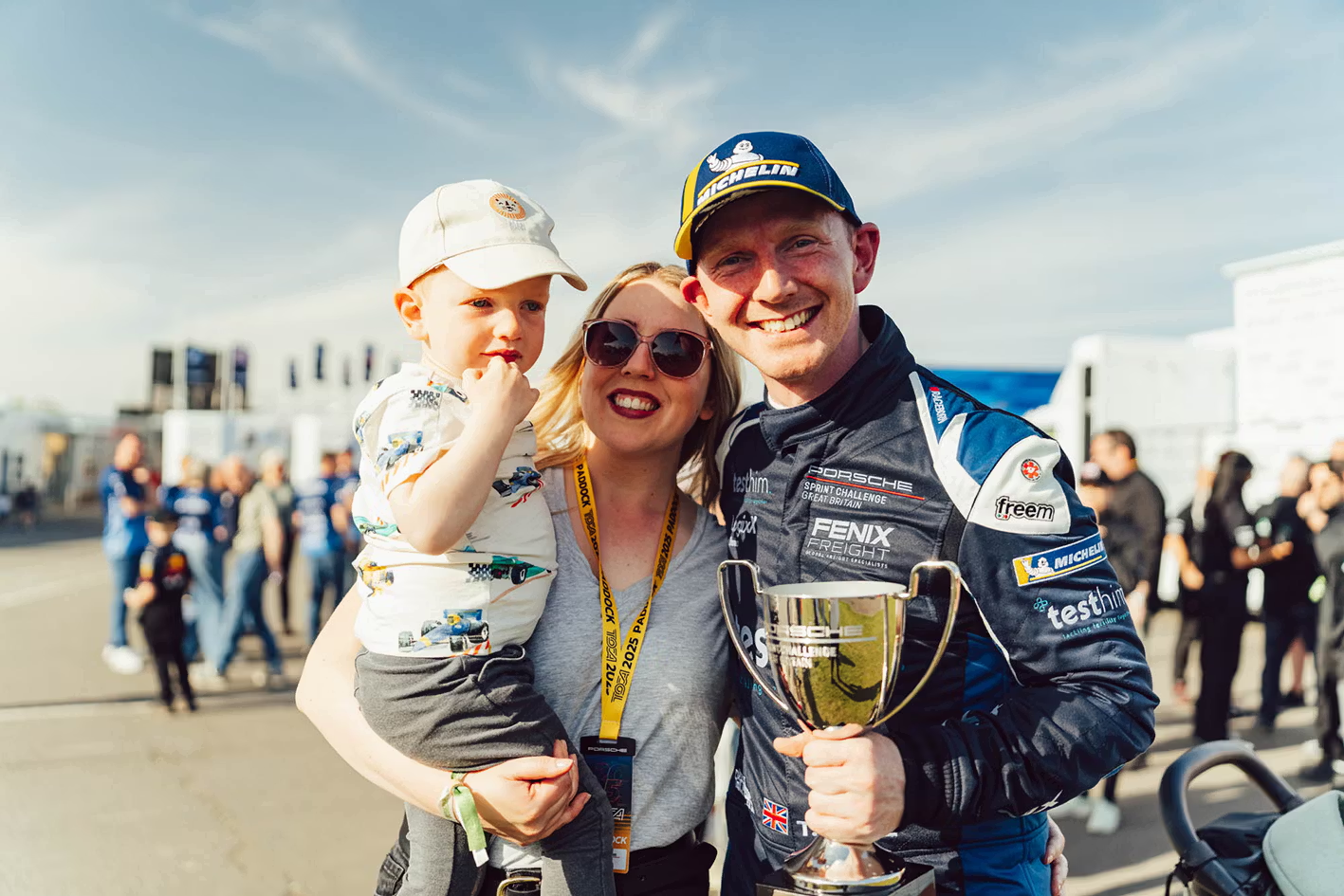
Toby and Katie’s story began like many young couples. Childhood sweethearts, they’d travelled, had their fun, and by their late twenties were excited to start a family. They were young, healthy, and hopeful. But like so many couples, they soon discovered that getting pregnant wouldn’t be simple.
After several months of trying without success, they were referred for fertility investigations. The referral brought a glimmer of hope – but also, unexpectedly, a wave of shame and confusion.
“Why couldn’t we do the thing that was supposed to be so easy?” Toby recalls. “We were surrounded by friends who were all having babies. It felt like the whole world was moving forward, but we were stuck.”
As testing began, the process quickly became centred on Katie. Ovulation tracking, hormone monitoring, specialist appointments – it all focused on her body. Toby’s semen analysis showed only slightly low morphology, and they were reassured that it wasn’t significant.
“Nobody ever really talked to me” Toby says. “Even when my results came back, they were read to Katie, even though I was sat right there. I felt like I didn’t matter, like I was just the guy who had to produce a sample.”
They went on to IVF, convinced this would bring them the child they so desperately wanted. But two rounds over six years failed. The repeated disappointment left them devastated.
“I completely fell apart after the second failed cycle,” Toby admits. “I remember seeing people at work with young babies and I just couldn’t cope. I broke down and was signed off sick. I had some really dark thoughts. I questioned whether I could carry on.”
His experience highlights a silent epidemic: the emotional isolation of men during fertility treatment. Despite male factor infertility contributing to nearly half of all cases, men often feel side-lined in the process – uninformed, unsupported, and voiceless.
The Unexpected Escape: Racing as Therapy
Amid the grief and frustration, Toby rediscovered his love for motorsport. What began as casual go-karting became his essential lifeline.
“For those few hours on the track, it all went away – the pressure, the heartbreak, the obsessing over ovulation windows. I could just race. It was the one time my head was completely clear.”
Toby’s talent behind the wheel quickly caught attention. He was named Buckmore Park’s Driver of the Year in 2019 and later secured a spot in the Ginetta Racing Drivers Club.
But while his racing career accelerated, life at home remained painfully stuck. Fertility treatment had consumed every part of their lives, and the strain was enormous. They decided to step back.
“We were exhausted. IVF had taken over our lives. We didn’t want to just throw thousands of pounds at more cycles without understanding why it wasn’t working.”
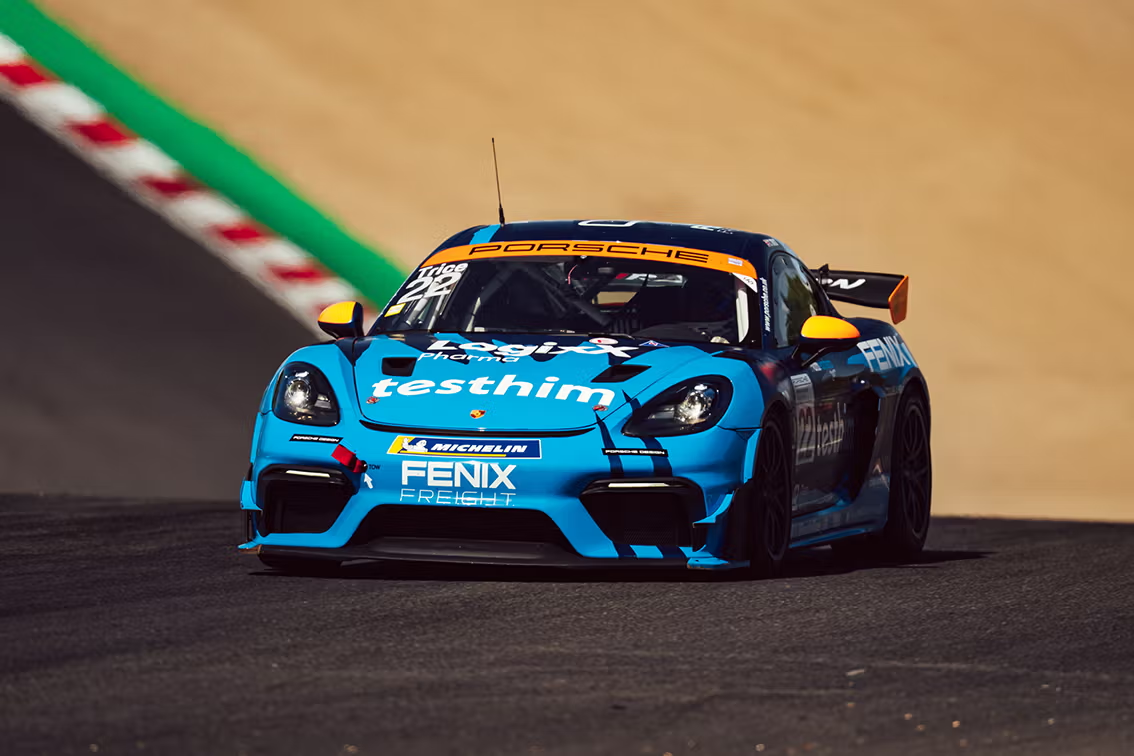
Through his racing connections and his outreach to charity, Toby found a new mission: to break the silence around male fertility. He launched the Racing for Fertility campaign to raise awareness and challenge the stigma men often face.
“It was terrifying,” he says. “I was still in the thick of treatment, still wondering if we’d ever have a family – and I was about to go public with the hardest thing I’d ever been through.”
His story quickly gained traction, appearing in local newspapers, on the BBC, and across social media. The response was overwhelmingly supportive.
“It was a relief in some ways. I realised I wasn’t alone. There were so many other men out there struggling, but no one was talking about it.”
The Missing Puzzle Piece: A Deeper Look at Male Fertility
As Toby’s profile grew, so did his involvement in supporting other men. Alongside fertility coach Ian Stones, he co-founded an online male fertility support group that launched during the first Covid-19 lockdown. The timing was crucial – fertility treatments had paused, and men were finally reaching out for help.
Through the group, Toby learned more about male fertility testing than he had ever been told during his own treatment.
“I kept hearing about things like DNA fragmentation and varicoceles, and I started to wonder – was there more to my story?”
With this new knowledge, Toby sought further testing. He vividly remembers the fear as he awaited his DNA fragmentation results.
“I was terrified. What if all along, it had been me? I felt sick with guilt at the thought. I’d spent years thinking it was Katie, but what if I’d missed something?”
The results revealed high sperm DNA fragmentation and a significant bilateral varicocele – both conditions have research to suggest that they can severely impact fertility.
“On the one hand, it was devastating. But on the other, we finally had answers. All this time, the focus had been on Katie, but it turned out I had an underlying issue that had never been properly investigated.”
Toby underwent a varicocele embolisation with interventional radiologist Dr. Steven Moser in November 2020, right in the midst of Covid-19 lockdowns.
“Going into that procedure on my own was daunting, but Steven was incredible. The embolisation went well, and I can’t tell you the difference I felt afterward. I always say it was like having a new set of balls! I’d ignored testicular pain for years because I just thought it was normal.”
Four months later, as they prepared for a follow-up appointment, something unexpected happened.
“I remember saying to Katie, wouldn’t it be funny if we didn’t need that appointment because we were pregnant? It was just a joke – but it came true.”
Toby and Katie conceived naturally – something they hadn’t dared to hope for after years of failed IVF.
“We were in disbelief. We took so many pregnancy tests. It was incredible – but also, I was angry. Angry that we’d been through years of invasive treatment, heartbreak, and expense, when no one had really looked at me properly from the start.”
Their son Oliver was born in December 2021.
Turning Pain Into Purpose: The Birth of testhim
Toby’s journey underscored the glaring gaps in male fertility care: a reliance on basic semen analysis, minimal physical examinations, and poor access to advanced diagnostic testing.
Determined to drive change, Toby joined forces with Michael Close, a biomedical scientist and fertility advocate, and Ian Stones to launch testhim – a platform dedicated to raising awareness, improving access to male fertility testing, and providing men with the support they often lack.
Michael Close, who has worked extensively in the male fertility space, explains, “There’s so much technology available now – testing for oxidative stress, sperm DNA fragmentation – but it’s still not part of routine care. Toby’s story shows how critical these tests can be.”
Through testhim, the team have developed a dedicated andrology lab in London, introduced advanced diagnostics like their own DNA fragmentation service, and created free resources for men, including podcasts, news articles, and an online risk assessment tool.
“We want men to understand they’re part of this journey,” Toby says. “Fertility is not just a woman’s issue. There are things men can do to improve their chances – but they need the right information and support.”
Racing On
Toby’s racing journey continues alongside his fertility advocacy. After winning the Ginetta GT Academy Championship in 2021, he progressed into the Porsche racing pyramid. A serious crash at Silverstone in 2023 nearly ended his racing career – but true to form, Toby got back on track.
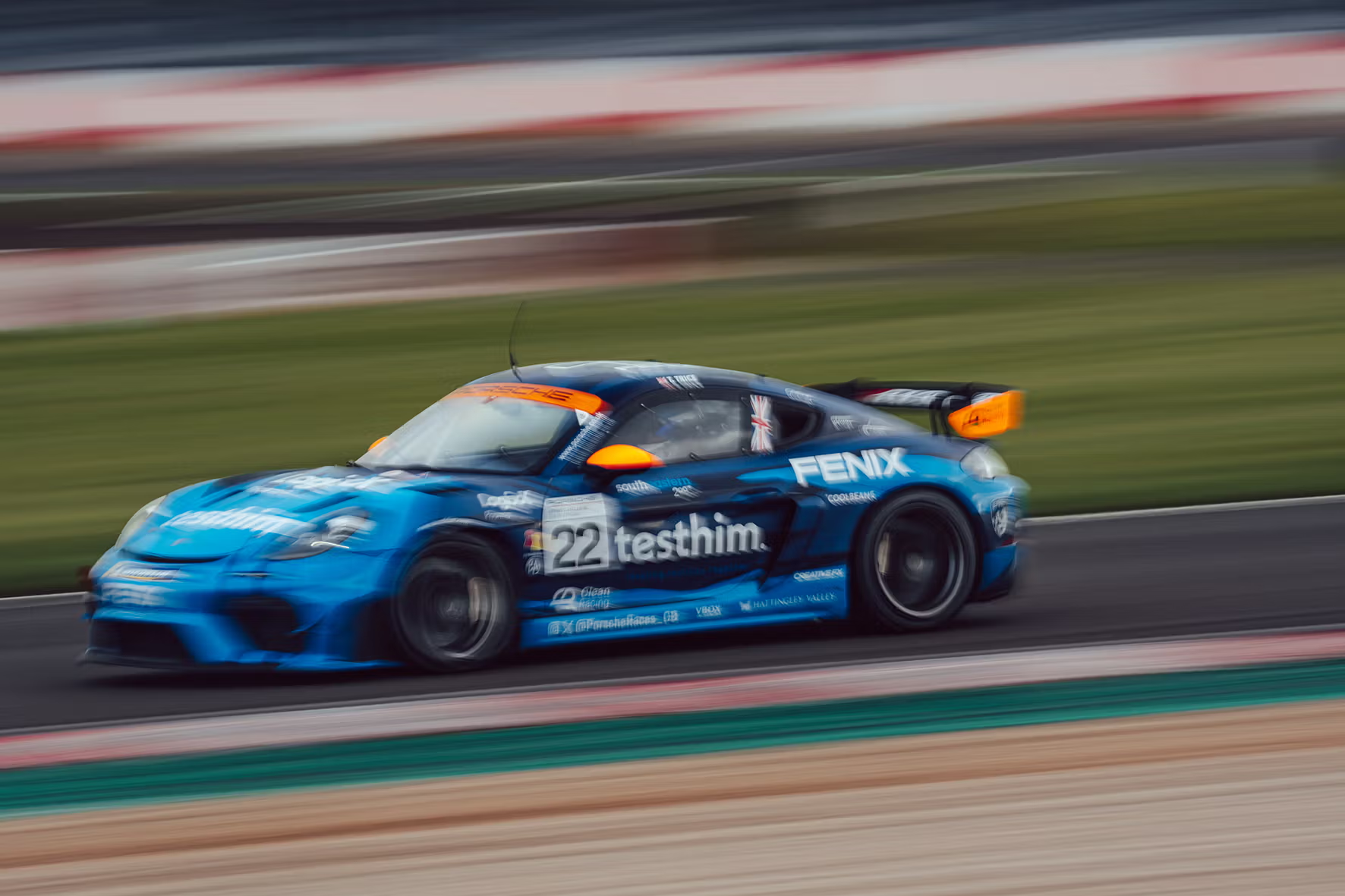
“There are so many parallels between motorsport and fertility. In racing, success is all about data, preparation, and teamwork. You leave nothing to chance. Fertility should be the same – you need to understand the details, look at all the contributing factors, and build the right support team. Investigating and treating the man has to be part of that!”
Through Racing for Fertility and testhim, Toby is determined to ensure no other man feels as isolated as he once did.
“If I can help one couple avoid what we went through, if I can help one man feel less alone, then everything we’ve been through will have been worth it.”
Guest Blog by Ian Stones