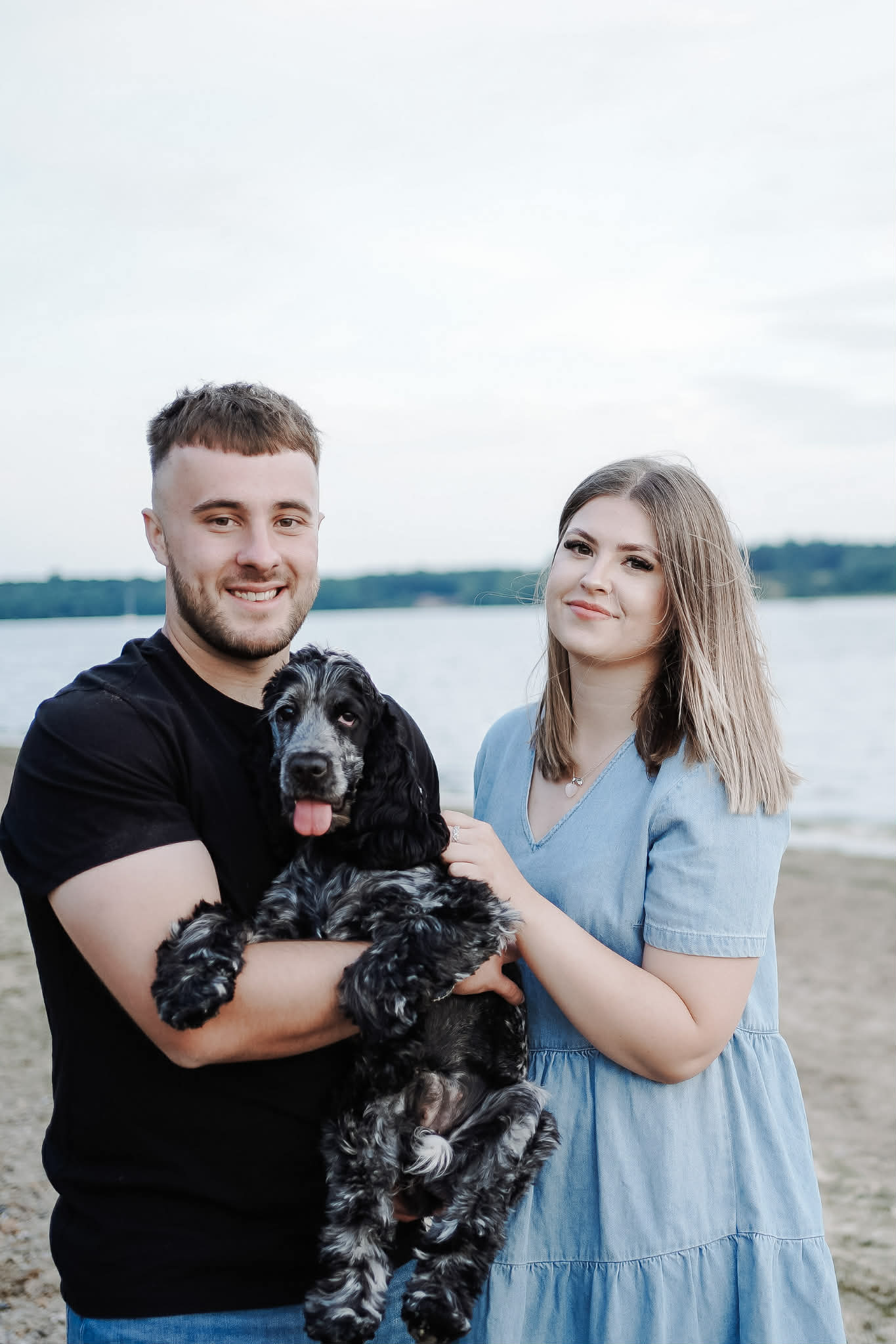
Bethany shares her and Ben’s heart-breaking story of a system that is not fitting patient needs.
When my fiancé Ben was diagnosed with testicular cancer in January 2020 aged just 23, shortly before the first Covid lockdown, our world stopped. We were young, scared, and suddenly forced to confront decisions no couple expects to face so early in life.
One of those decisions was fertility preservation. Ben’s oncology team were clear: the chemotherapy and surgery required to save his life were highly likely to leave him infertile. Acting on medical advice, and before treatment began, his fertility was preserved at a clinic in Wickford. This was funded with the explicit intention of safeguarding our chance of having a family in the future.
At the time, Ben’s BMI was assessed and confirmed to be below 30. His fertility preservation was approved and funded in good faith, as part of his cancer care.
The cancer treatment saved Ben’s life. But, exactly as predicted, it left him infertile. Urology and Oncology at Ipswich Hospital have since confirmed that there are no other options for us. If we are to have a child that is genetically ours, IVF using the sperm frozen before cancer treatment is our only chance. That is where we encountered a devastating and deeply illogical barrier. We were told that the funding appointment could not take place, because of Ben’s BMI. This was not because weight had caused infertility, it hadn’t. It was also not because it affected the treatment, it doesn’t. But because BMI is listed as a rigid eligibility criterion within our local Integrated Care Board (ICB) SNEE’s IVF policy.
In our case, BMI has no clinical relevance. The fertility being used was preserved years ago, before cancer treatment. Current BMI does not affect fertilisation, embryo development, or implantation. Implantation and pregnancy outcomes relate to the health of the person carrying the pregnancy, me. Not my partner. Private fertility clinics themselves acknowledge that BMI is a blunt and outdated tool, which is why many do not rely on it in isolation. Yet in our case, it has been applied mechanically, without discretion, and without any apparent consideration of individual medical context or exceptional circumstances.
What has been particularly distressing is that our case does not appear to have been clinically advocated for at ICB level at all. Instead, we were advised verbally and via email, that we did not meet the criteria and were directed to raise a complaint ourselves through PALS if we wished to challenge the decision. We are now in the midst of that complaint process, which has been escalated to the Chief Executive, but the emotional toll of having to fight so hard simply to be heard has been immense.
There is a cruel contradiction at the heart of this situation.
Had Ben not survived cancer, I would legally be able to access his stored frozen sample. We signed the relevant consent forms acknowledging this possibility, when fertility was preserved. The fact that he did survive, that he is now a fit, physically active young man of muscular build, is the very reason we are being denied NHS-funded treatment.
Survival, in effect, is being penalised. This cannot be ethically or logically justified.
For Ben, the impact has been deeply damaging. He survived cancer. He lost his fertility. And now he is effectively being body-shamed because of his BMI by a system that once sought to protect him. The mental and emotional strain of this sequence of losses is hard to put into words.
Our experience has made one thing painfully clear: there is a serious gap in NHS IVF funding policy when it comes to cancer survivors. Fertility preservation is offered to patients in good faith, often at a time of extreme vulnerability, with the promise that it protects future family-building. But if access to IVF can later be blocked by unrelated and clinically irrelevant criteria, that promise is hollow. The purpose of fertility preservation is fundamentally undermined.
This issue is not isolated. Other cancer survivors, such as Mollie Mulheron, have faced similar barriers due to rigid ICB policies. (Listen to Mollie’s story on the Fertility Action You Tube channel soon). Mollie attended the House of Commons alongside Fertility Action’s Trustee Carole Gilling-Smith last year to raise her case, supported by her MP, Oliver Ryan. We now find ourselves experiencing a similar injustice.
In response, we started a public petition calling for greater discretion and fairness in NHS IVF funding for cancer survivors. The petition has gained tens of thousands of signatures in a short space of time, demonstrating how strongly people feel about this issue. This can be found here: www.change.org/CancerandIVF
We spoke out because we realised this is bigger than us.
We are not asking for special treatment. We are asking for discretion, proportionality, and common sense in exceptional medical circumstances. NHS policies already allow for discretion, we are simply asking for it to be used. The ICB has indicated that it is reviewing its fertility funding policies, which is encouraging, but it remains unclear what that review entails or whether it will meaningfully address situations like ours.
Cancer takes enough. It should not continue taking even after survival. No one should be offered fertility preservation as part of their cancer care, only to discover later that it is effectively inaccessible due to an unrelated administrative rule. Surviving cancer should not come at the cost of being denied a family. This is about fairness. It is about trust. And it is about ensuring that policies designed to protect patients do not, through rigidity, cause further harm.”