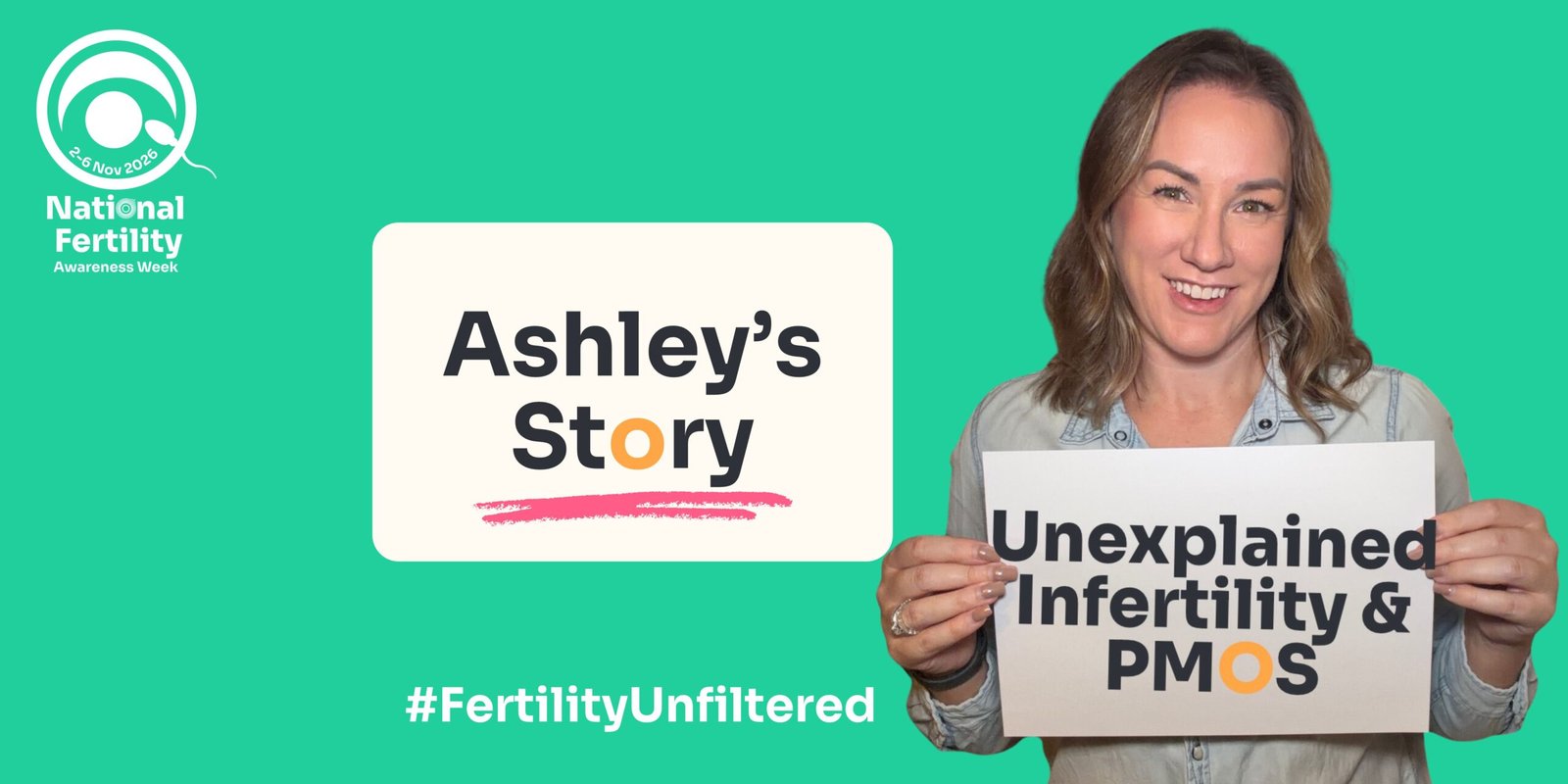
After my husband and I had been trying unsuccessfully to conceive, we visited our GP, who referred us for fertility testing and to a consultant. The results identified male factor infertility, relating to the concentration, morphology and motility of my husband’s sperm. They also showed that I wasn’t ovulating as expected and that I had a mild bicornuate uterus, where the womb is heart-shaped.
A race against the clock
During this time, the pandemic began, bringing all fertility-related investigations and treatment to a halt.
The local NHS criteria in my area meant that, to be eligible for funded treatment, I had to start treatment before my 35th birthday. At the time, I was 33 or 34, and there was no certainty that we would be able to begin treatment before I reached that age. As a result, we started researching fertility clinics outside the UK.
When everyone around you is pregnant
While we were trying unsuccessfully to conceive, so many of my friends and people around me were falling pregnant. It was incredibly difficult watching those closest to me experience something I desperately wanted, trying to be happy for them while grieving something I didn’t know whether I would ever have.
It also made me realise just how many people don’t know or understand how to support a friend or colleague navigating infertility.
Infertility at work
My experience at work was, let’s say, interesting. As a married woman in my mid-30s, I experienced comments about how my pregnant friends were getting ahead of me, alongside questions about when I was going to have a baby. When I chose to share what I was going through, I was often met with ‘success stories’ about people who had stopped trying and then fallen pregnant.
Thankfully, my supervisor was incredibly supportive. When I told him about my planned treatment, his response was that, although he didn’t understand what I was going through, he was there for me if I wanted to talk. That reassurance was a huge relief, particularly when I had experienced such varied responses from other people.
The organisation I worked for also had a fertility policy in place, allowing me a number of hours of paid leave specifically for fertility treatment.
Our ICSI cycle
My husband and I started our NHS-funded treatment cycle the month before my 35th birthday.
We underwent intracytoplasmic sperm injection (ICSI), where a single sperm is injected directly into each egg. However, during the cycle, we faced the possibility of cancellation because my follicles weren’t developing as well as hoped. This resulted in changes to my stimulation medication, which thankfully worked, and we went on to have two embryos.
On the day of my fresh embryo transfer, I was showing minor symptoms of ovarian hyperstimulation syndrome (OHSS). There was some consideration given to cancelling the transfer, but the doctor judged that my symptoms were mild enough for us to proceed.
Following that embryo transfer, we conceived our son, who was born in 2022.
One embryo, many questions
We still have one embryo in storage, for which we continue to pay annual storage fees. We haven’t yet decided whether to try again. There are so many questions to consider: whether we could afford another child, whether our family feels complete as it is, and whether there is still a part of us that wants to try again. Our journey continues.
By Ashley Evans
If anything in this story has stirred up feelings for you, please know you’re not alone, and there are people who understand. Alongside Fertility Action, Fertility Matters at Work offer support and information.