When One Story Changes Everything: A Gentle Shift Towards Dignity in Miscarriage Care
There are moments in healthcare where change does not begin in a boardroom or a policy document, but in the quiet, private experience of a single patient.
This is one of those stories.
At Fertility Action, we often hear from individuals navigating loss in spaces that were never fully designed to hold them. Their voices – sometimes shared in whispers, sometimes in anger, often in grief – carry the power to reshape care for those who come after them.
Laura’s experience is one such voice.
A moment no one prepares you for
Miscarriage is often spoken about in statistics, but rarely in lived detail. Yet behind every number is a person moving through something deeply physical and profoundly emotional at the same time.
For Laura, that experience unfolded at home.
What should have been a moment held with care instead became one filled with uncertainty. There were practical questions no one had prepared her for – questions that felt impossible to ask, and even harder to answer in the middle of loss.
How do you manage what is happening to your body?
How do you care for something that already means everything?
In the absence of guidance, she and her partner did what so many patients before them have done: they improvised.
And afterwards, alongside the grief, something else remained – an awareness that this part of the experience did not have to be this way.
When grief becomes a catalyst
Not everyone wants to revisit their experience. Many simply try to move forward, carrying what they must.
But sometimes, in the space that follows trauma, there is also a quiet determination: this could be better – for someone else.
Laura began to think not just about what she had gone through, but about what future patients might face in the same situation. The practical gaps. The emotional weight. The lack of dignity in moments where dignity matters most.
From that reflection came an idea – one rooted not in technology for its own sake, but in compassion.
A simple tool. A considered design. Something that could remove even a fraction of the distress from an already overwhelming experience.
A shift in how care is given
Today, that idea is beginning to shape hospital care in Scotland.
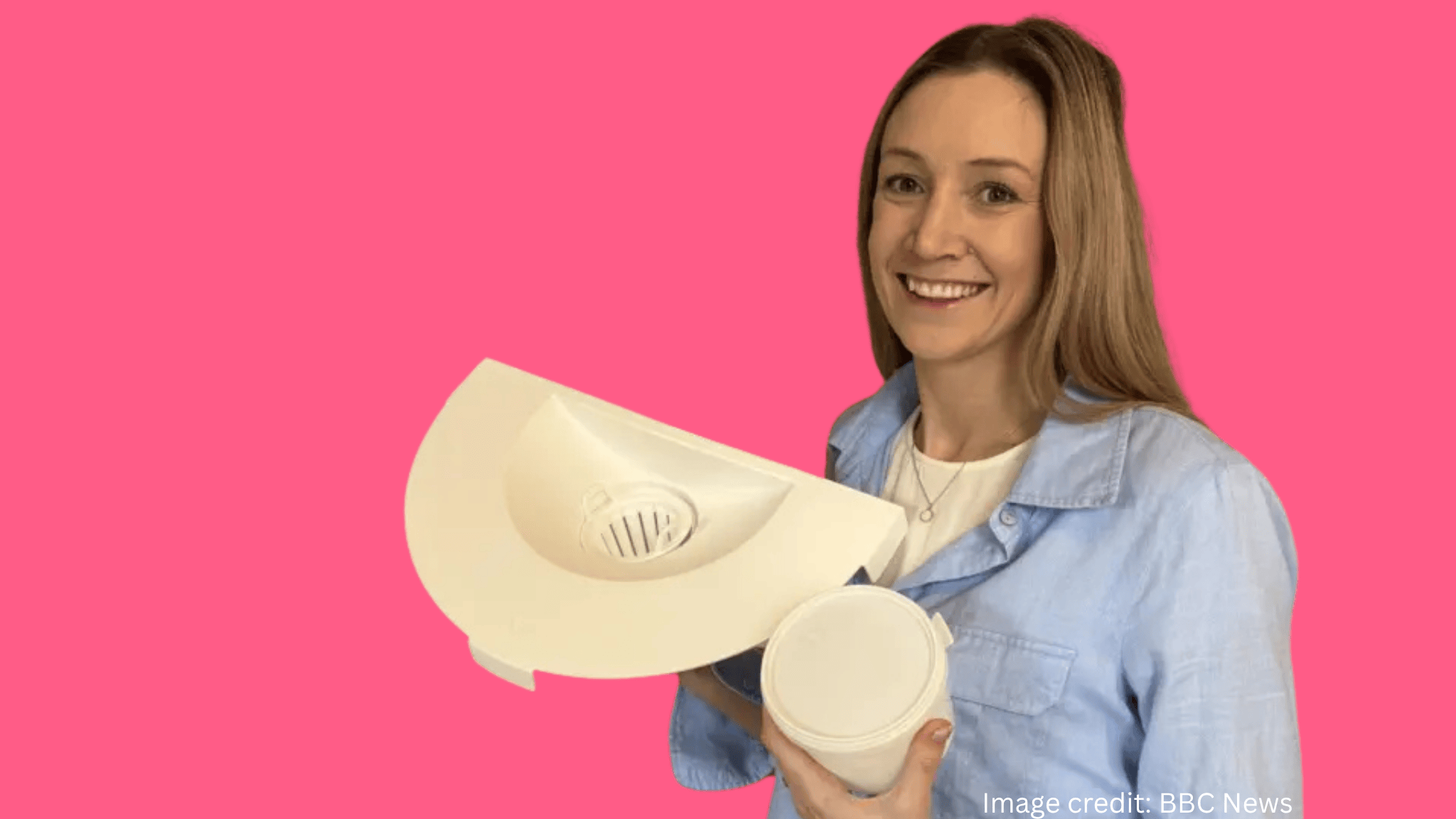
Created by Dignity Care Network and shaped by the lived experience of Laura Corcoran, this device was born out of a reality many will recognise.
The introduction of the miscarriage cradle across several hospitals, starting at NHS Greater Glasgow and Clyde, marks more than the rollout of a device. It represents a recognition- long overdue – that miscarriage care must address both the physical reality and the emotional experience, together.
Because patients do not experience these things separately.
They happen all at once.
And when practical care is missing, emotional harm can deepen.
What Laura created offers something small but significant: a sense of control, of gentleness, of respect. It allows patients to focus less on managing the process, and more on moving through it in a way that feels supported.
The quiet impact of patient-led change
Stories like this remind us that patients are not just recipients of care – they are often the architects of its future.
Across the UK, and in the work we do at Fertility Action, we see how lived experience can illuminate what systems overlook. It is often patients who first identify where dignity is lost, where communication falters, where compassion could go further.
And when those insights are listened to, real change follows.
Not instantly. Not perfectly. But meaningfully.
Holding space for those reading
If this story resonates with your own experience, we see you and are always here when you need support.
We know that for many, miscarriage is not about loss on it’s own – it is about how that loss was handled, explained, or supported. And those memories can stay with us.
What matters is that care continues to evolve. That voices are heard. And that future patients are met with greater understanding than those who came before.
Looking forward
The introduction of tools like the miscarriage cradle is a step – one shaped by courage, by honesty, and by a refusal to accept that difficult experiences must remain unchanged.
Laura’s story is not defined solely by what she went through, but by what she chose to do with it.
And because of that, others may now face those same moments with a little more support, a little more dignity, and a little less uncertainty.
That is how change begins.
Quietly. Personally. And then, all at once, collectively.
At Fertility Action we continue to advocate for positive change around Fertility Access, Women’s Health and Reproductive Health – more information here if you want to learn more or join our advocacy work.